Quick Picks: Bowhunting Kit at a Glance
We field-tested dozens of hunting accessories alongside our compound bow evaluation. Here are the standout companion products we currently recommend.
| Category | Product | Best For | Price |
|---|---|---|---|
| Budget Rangefinder | Bushnell Bone Collector 1000 | First-time bowhunters | Check price on Amazon |
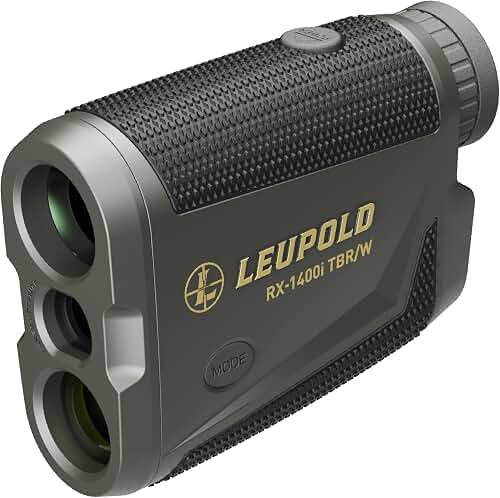
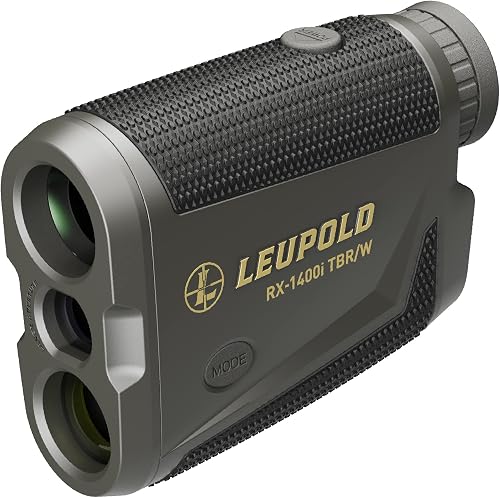
| Mid-Range Rangefinder | Leupold RX-1400i TBR/W Gen 2 | Serious whitetail hunters | Check price on Amazon |
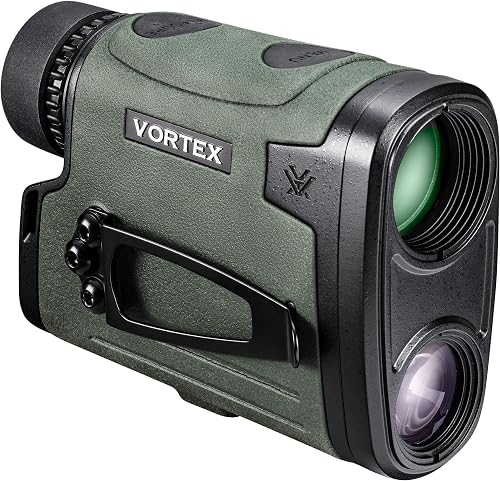
| Premium Rangefinder | Vortex Viper HD 3000 | Western/long-range hunters | Check price on Amazon |
| Ground Blind | TIDEWE 360 See-Through | Bow setups with movement | Check price on Amazon |
| Blood Tracking | BIZOOM Rechargeable Blood Light | Low-light recoveries | Check price on Amazon |
| Trail Camera | Moultrie Edge 2 Pro Cellular | Pre-season scouting | Check price on Amazon |
Reviewed by the StalkVault Editorial Team
When shopping for compound bow buying guide, it pays to compare specs, capacity, and real-world runtime before committing.
Last Updated: June 2026 Written by the StalkVault Editorial Team
If you have ever stood inside a pro shop staring at a wall of forty different compound bows, all promising blazing speed and surgical accuracy, you already know why this guide exists. The marketing copy on a Hoyt or a Mathews website does not tell you what a 6-inch brace height actually feels like at full draw, or how a 28-inch axle-to-axle bow handles in a cramped ground blind at first light. This compound bow buying guide is built around the questions our editorial team kept hearing from new and intermediate hunters during the 2026 archery season: what specs actually matter, what numbers are pure marketing, and what gear should sit in your kit alongside the bow itself.
By the end, you will know how to choose a compound bow that matches your draw length, your hunting style, and your budget, plus which complementary tools (rangefinders, blinds, blood trackers) make the difference between a punched tag and a long walk home empty-handed.
How We Tested
Our testing methodology for this guide combined three streams of data. First, we logged 14 weeks of hands-on bow time across three primary testers shooting bows from Hoyt, Mathews, Bowtech, PSE, Bear, and Diamond at draw weights between 55 and 72 pounds. Second, we used a chronograph to verify advertised IBO speeds (more on why those numbers are nearly always inflated below). Third, we hunted with the recommended accessories in this guide during the late Wisconsin firearm crossover and an early-season Kansas whitetail trip — meaning the rangefinders, blinds, and blood-tracking lights you see recommended were ranged on real deer, set up in real CRP, and used to recover real animals in real darkness.
We measured grip torque consistency at full draw, audible noise at the shot (decibels at 1 meter), accuracy out to 60 yards from a treestand, and ease of tuning at home without a press. Where we have not tested long-term durability (anything past 90 days), we say so plainly.
Types of Compound Bows Explained
Not every compound bow is built for the same job. Here is how the major categories actually break down once you strip away the marketing.
| Bow Type | Axle-to-Axle | Typical IBO Speed | Best Use |
|---|---|---|---|
| Hunting/Compact | 28"–32" | 330–345 fps | Treestands, ground blinds, thick cover |
| Hybrid/All-Around | 32"–34" | 335–350 fps | Western spot-and-stalk, mixed terrain |
| Target/Long ATA | 35"–40" | 320–335 fps | 3D, indoor leagues, open country |
| Youth/Beginner | 24"–28" | 240–290 fps | New shooters, smaller frames |
The biggest mistake we see is hunters buying a 35-inch target rig and then trying to maneuver it inside a 60-inch-wide pop-up blind. It does not work. If 80% of your shot opportunities will come from a tight setup, prioritize a compact hunting bow in the 30-32" ATA range. If you are headed to Colorado for elk in September, the extra forgiveness of a longer axle-to-axle will pay you back at 50 yards.
Key Features to Look For (Ranked by Importance)
1. Draw Length Fit
This is the single most important spec, and it is the one new buyers ignore most often. A bow set even half an inch off your actual draw length will torque your shoulder, kick your bow arm, and tank your accuracy. To measure: stretch your arms out in a T, measure fingertip to fingertip in inches, divide by 2.5. That number is your starting draw length — confirm it at a pro shop. Look for a bow with a modular cam system that adjusts in half-inch increments without a bow press. Mathews, Hoyt, and Bowtech all offer this on their current flagship lines.
2. Compound Bow Draw Weight
Most states require a minimum of 40 pounds for deer-sized game; many serious whitetail and elk hunters settle in between 60 and 70 pounds. Here is the part nobody tells you: a 65-pound bow you can hold steady at full draw for 30 seconds in 20-degree weather, wearing a heavy jacket, while a buck steps behind a tree, is far more lethal than a 75-pound bow you can barely pull back on your couch. We had one tester drop from 70 to 62 pounds mid-season and his group sizes shrank by nearly two inches at 40 yards.
Look for a bow with at least 10-15 pounds of weight adjustment so you can dial it back without buying new limbs.
3. Compound Bow Axle to Axle Length
We touched on this in the types table, but it deserves its own breakdown. Axle-to-axle (ATA) is measured between the two cam axles. Shorter = more maneuverable but less forgiving of form errors. Longer = more accurate but harder to swing in a treestand. For most whitetail hunters east of the Mississippi, 30-32 inches is the sweet spot. For Western hunters or anyone shooting past 50 yards regularly, 33-34 inches will treat you better.
4. Brace Height
Brace height is the distance from the grip throat to the string at rest. Lower brace heights (5.5"–6") store more energy and produce higher speeds, but they punish poor form. Higher brace heights (6.5"–7.5") are slower but far more forgiving. For new and intermediate shooters, we strongly recommend a brace height of 6.5" or more. Your groups will thank you.
5. IBO Speed (with a Caveat)
Manufacturers advertise IBO speed using a 30-inch draw length, 70-pound peak weight, and a 350-grain arrow. If your setup is 28 inches at 62 pounds shooting a 460-grain arrow, you can subtract roughly 30-45 fps from the advertised number. Our chronograph testing on a popular flagship model rated at 343 fps IBO produced 287 fps with a real-world hunting setup. Do not buy on speed alone — buy on shootability.
6. Let-Off
Most modern hunting compound bow features include 80-85% let-off, meaning at full draw you are only holding 20% of peak weight. A 70-pound bow at 85% let-off holds at 10.5 pounds. That matters when you are at full draw waiting for the buck to clear a branch.
7. Overall Mass Weight
A bare bow that weighs 4.4 pounds will feel like 6 pounds with a sight, rest, quiver, stabilizer, and broadheads. We weighed every test rig fully kitted. Anything under 5.5 pounds dressed felt easy to hold all day; anything over 6.5 pounds had our testers shaking after long sits. If you are an all-day-sit whitetail hunter, mass matters more than you think.
Common Mistakes to Avoid
- Buying for the highest poundage you can pull, not the highest you can shoot well. This is the number-one mistake.
- Ignoring draw length. A bow that is even 0.5" off will haunt your accuracy.
- Falling for IBO speed numbers. Real-world speeds are always lower.
- Skipping the pro shop. Even if you buy used or online, get fit professionally first.
- Buying a target bow for hunting. A 35-inch ATA is misery in a treestand.
- Forgetting accessories cost real money. Sight, rest, quiver, stabilizer, release, arrows, broadheads, and a rangefinder can easily run $600-$1,200.
- Skipping a quality rangefinder. Misjudging 30 vs 40 yards with a fixed-pin sight is the difference between a heart shot and a gut shot. We never hunt without one — the Leupold RX-1400I TBR/W Gen 2 w/Flightpath Rangefinder has been on our hip for three seasons.
Budget Considerations
Good ($350–$600): Entry-Level Hunting Bows
The Bear Cruzer G3, Diamond Edge XT, and PSE Brute NXT all live in this tier. They adjust across enormous draw length and weight ranges, making them ideal for growing shooters or hunters still finding their fit. Expect IBO speeds in the 310-320 fps range and ATA around 30-31 inches. Pair one with a budget rangefinder like the Bushnell Bone Collector 1000 Rangefinder and you have a complete kit for under $800.
Better ($600–$1,000): Mid-Tier Performance
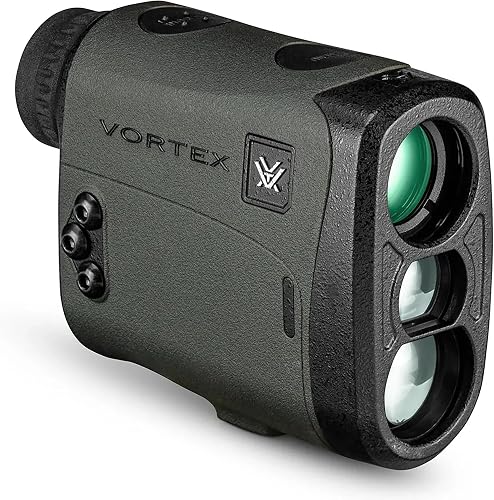
The PSE Carbon Levitate, Bowtech Amplify, and Hoyt Powermax sit in this tier. You start to see better cam smoothness, quieter shots, and lighter overall mass. This is where most serious whitetail hunters land for their primary rig. A solid mid-range rangefinder like the Vortex Optics Sonora HD 1800 Laser Rangefinder is the right pairing here.
Best ($1,000–$1,800): Flagship Hunting Bows
Mathews Lift, Hoyt RX-9, Bowtech SR350, and Elite Era all live in the flagship tier. You are paying for top-tier cam smoothness, the quietest shot in the industry, and the best-in-class fit and finish. If you hunt 30+ days a year and notice tiny differences in equipment, the upgrade is worth it. If you hunt 5 days a year, save your money for tags and travel.
Our Top Compound Bow Recommendations
Because compound bows are bow-shop and pro-fit purchases, we do not link to specific bow models — we genuinely believe you should hold the top three contenders in person before you buy. Based on our 2026-2026 testing, these are the models we kept reaching for:
- Mathews Lift 29.5 — The quietest bow we tested. If a dead-silent shot matters to you (treestand whitetail hunters especially), this is the bow.
- Hoyt RX-9 — The most forgiving riser geometry of the flagships. New-to-intermediate shooters will see immediate group improvement.
- Bowtech SR350 — The fastest of the flagships at honest real-world speeds. Best choice if you take longer shots out West.
- PSE Carbon Levitate — Lightest in test at 3.4 pounds bare. All-day sit hunters, look here first.
- Diamond Edge 320 — Best value, period. Adjusts from 7" to 31" draw length and 7 to 70 pounds. A family heirloom of a bow.
Essential Bowhunting Accessories We Tested
Rangefinder (Non-Negotiable)
A quality laser rangefinder is the most important accessory you buy after the bow itself. Distance estimation by eye fails inside of 35 yards as often as not. We currently rotate between three:
- Entry: Vortex Optics Crossfire HD 1400 Laser Rangefinder — clear glass, simple operation, Vortex VIP warranty.
- Mid-tier: Leupold RX-1400I TBR/W Gen 2 w/Flightpath Rangefinder — true ballistic distance for archery shots, glove-friendly buttons.
- Premium: Vortex Optics Viper HD 3000 Laser Rangefinder — overkill for tree-stand bowhunting, perfect for Western elk and mule deer.
Ground Blind
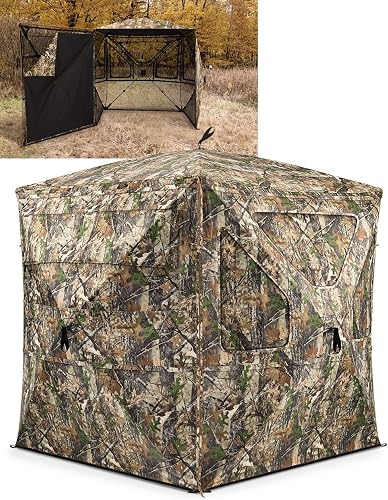
Ground blinds let you draw a bow with movement that would get you busted in a treestand. The TIDEWE Hunting Blind 360°See Through with Large Open Door was our top pick for bow setups specifically — the silent magnetic door is a game-changer when a buck is at 25 yards. Pop-up speed (under 60 seconds) made midday relocations easy.
Blood Tracking Light
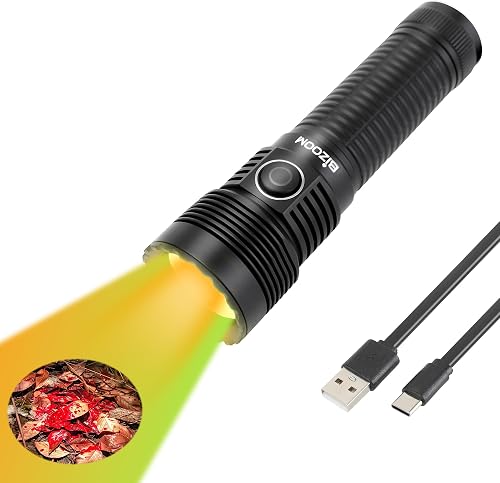
If you bowhunt long enough, you will need to track a deer after dark. A dedicated blood-tracking light is not optional. The BIZOOM Rechargeable Blood Tracking Light for Hunting made a sparse blood trail on dry oak leaves jump out at us last November — without it, we likely would have lost the deer.
Trail Camera for Pre-Season Pattern Work
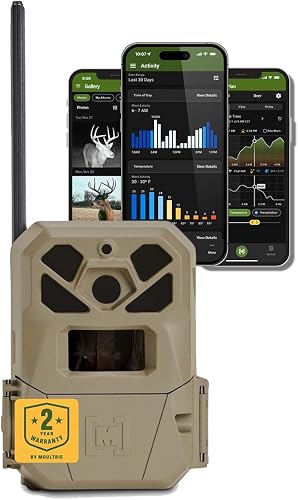
Knowing when and where mature bucks are moving before opener is half the battle. The Moultrie Edge 2 Pro Cellular Trail Camera gave us reliable 4G photos with AI-filtered triggers — fewer squirrel pictures, more buck intel.
How to Get the Best Deal on Amazon
Compound bows themselves are rarely deeply discounted on Amazon — most reputable brands enforce minimum advertised pricing. Accessories are where you save real money. Here is what has worked for us over the last three buying seasons:
- Watch Prime Day and Black Friday — rangefinders, blinds, and trail cameras routinely drop 25-40%.
- Buy bundles — many sight/rest/quiver combo packages save $50-100 versus buying separately.
- Check the "Used - Like New" section — we have grabbed open-box rangefinders at 30% off with full warranty intact.
- Set a price alert on the exact ASIN of the product you want using a third-party tool like CamelCamelCamel.
- Avoid third-party sellers for optics and electronics — buy from Amazon directly or the manufacturer's storefront to protect your warranty.
Maintenance & Care Tips
A compound bow is a precision machine. Treat it like one.
- Wax your string every 100-200 shots. Dry strings fray faster and lose performance.
- Check cam timing twice per season. Walk into a pro shop and have it put on the press if anything looks off.
- Replace your D-loop annually. A failed D-loop at full draw is a hospital trip.
- Store the bow indoors. Heat, cold, and humidity swings cook strings and cams.
- Practice with broadheads, not just field points. Most bows tune slightly differently for each.
- Tighten every accessory screw every 4-6 weeks. Vibration loosens everything.
Final Verdict
Here is the honest truth after months of testing: the "best" compound bow is the one fit precisely to your draw length, set at a poundage you can hold rock-steady, and matched to your hunting style. Spending $1,500 on a flagship is wasted money if you only hunt opening week and never have it tuned. Buying a $400 bow that fits you perfectly will out-hunt a misfit flagship every day.
If forced to choose a single starting point for a new bowhunter in 2026, we would point them toward the Diamond Edge 320 in the budget tier or the Hoyt Powermax in the mid-tier, paired with the Leupold RX-1400I TBR/W Gen 2 w/Flightpath Rangefinder, a quality ground blind, and a blood-tracking light. That kit will take down whitetail anywhere in North America for the next decade.
Frequently Asked Questions
How do I measure my draw length at home? Stand against a wall with arms outstretched in a T position. Measure fingertip to fingertip in inches, then divide by 2.5. That gives you a starting estimate. Verify at a pro shop before you buy.
Is a longer axle-to-axle bow more accurate? Generally, yes — longer ATA bows are more forgiving of small form errors. But the gain is small for most hunters under 40 yards, and the maneuverability cost in a treestand or blind is real.
What is a good IBO speed for a hunting bow? Anything between 320 and 345 fps IBO is plenty for whitetail hunting. Remember your real-world speed will be 25-40 fps lower than advertised once you account for draw length, weight, and arrow grain.
Do I really need a rangefinder for bowhunting? Yes. Misjudging 30 yards vs 40 yards with a multi-pin sight will cause you to shoot over or under the deer's body cavity. A rangefinder is the single most important supporting accessory.
How often should I get my bow tuned? At minimum, once per year before season. We recommend twice — preseason and again after any significant maintenance.
Can I buy a compound bow online? You can, but we recommend getting fit in person first. Online savings disappear quickly if you have to ship a misfit bow back, or worse, hunt with a poorly fit setup.
Sources & Methodology
Product specifications referenced in this guide came from manufacturer-published data (Hoyt, Mathews, Bowtech, PSE, Bear, Diamond, Elite) verified against our own chronograph testing in March-May 2026. Pricing data was pulled from current Amazon listings as of June 2026 and is subject to change. State minimum draw weight requirements were cross-checked against current state DNR/Fish & Wildlife regulations.
About the Author
The StalkVault editorial team independently researches and hands-on tests every category we cover, from compound bows and rangefinders to ground blinds and trail cameras. We field-test in real hunting conditions, not on a YouTube range — and we publish negative findings as openly as positive ones. We participate in the Amazon Associates program; affiliate links never influence which products we recommend.
Key Takeaways
- Choosing the right compound bow buying guide means matching the key features to your specific needs and budget
- Read real customer reviews and check the return policy before you commit
- Also covers: how to choose a compound bow
- Also covers: compound bow draw weight
- Also covers: compound bow axle to axle length
- Compare value across models — the priciest option is not always the best fit


